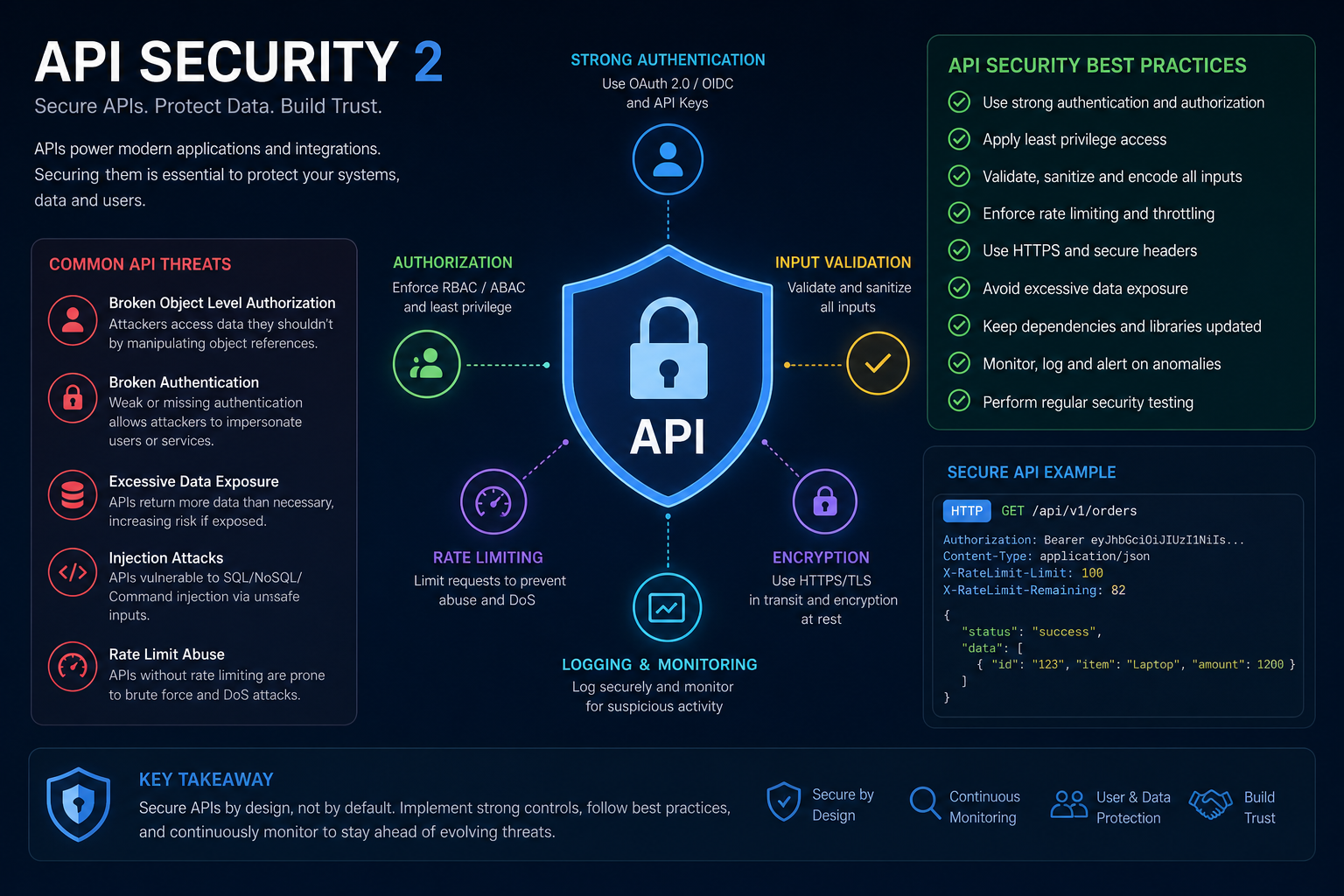
APIs are the connective tissue of modern digital products. They power mobile apps, customer portals, internal dashboards, third-party integrations, and cloud-based services. For a bespoke web development agency, API security is not a secondary technical concern; it is a core part of building reliable, scalable, and trustworthy systems. A beautifully designed application can still fail catastrophically if its APIs expose sensitive data, allow unauthorized access, or create openings for abuse. Strong API security protects business logic, customer information, and operational continuity.
One of the most important principles in API security is authentication and authorization. Authentication verifies who is making the request, while authorization determines what that user or system is allowed to do. These two functions must be handled carefully and separately. Secure APIs commonly use standards such as OAuth 2.0, OpenID Connect, API keys for controlled service access, and signed tokens with strict validation rules. However, simply implementing a login mechanism is not enough. Every endpoint should enforce least-privilege access, ensuring users and systems can only access the resources necessary for their role. Broken access control remains one of the most common and damaging API vulnerabilities.
Data exposure is another major area of risk. APIs often return structured information in predictable formats, which makes them efficient but also attractive targets. If an endpoint returns too much data, exposes internal object identifiers, or leaks sensitive fields such as personal details, account metadata, or financial information, the impact can be severe. Secure API design requires deliberate control over response payloads, field-level filtering, proper object ownership checks, and strong encryption in transit using TLS. Sensitive data should also be minimized at the design stage so that APIs never transmit or store more information than necessary.
Input validation and rate limiting are essential defenses against both exploitation and service abuse. APIs should never trust client input, regardless of whether the caller is a browser, mobile application, or another backend service. Requests must be validated for structure, type, length, format, and expected values before any processing takes place. This helps reduce the risk of injection attacks, mass assignment issues, and malformed payloads that can destabilize systems. Rate limiting, throttling, and request quotas help protect APIs from brute-force login attempts, scraping, denial-of-service behavior, and excessive use by poorly configured integrations. Combined with monitoring and alerting, these controls provide visibility as well as protection.
A secure API strategy also depends on lifecycle discipline. Security must be built into architecture, development, testing, deployment, and maintenance. This includes versioning APIs responsibly, deprecating old endpoints, rotating secrets, maintaining accurate documentation, and scanning dependencies for known vulnerabilities. Logging should capture meaningful security events without exposing sensitive values, and error messages should be useful to developers without revealing internals to attackers. Regular penetration testing, code review, and automated security testing in CI/CD pipelines help identify weaknesses before they become incidents in production.
For bespoke web development agencies, API security is a direct reflection of engineering quality. Clients rely on custom-built platforms to handle business-critical operations, customer trust, and regulatory obligations. Delivering secure APIs requires more than compliance checklists or one-time fixes; it requires thoughtful design, defensive coding practices, and ongoing governance. Agencies that treat API security as a foundational part of delivery produce systems that are not only functional and performant, but resilient against the evolving threats that come with connected software.